
Telescope: The Best Tool for Exploring the Universe
Choosing your first telescope is an exciting step into the world of stargazing and astronomical exploration.

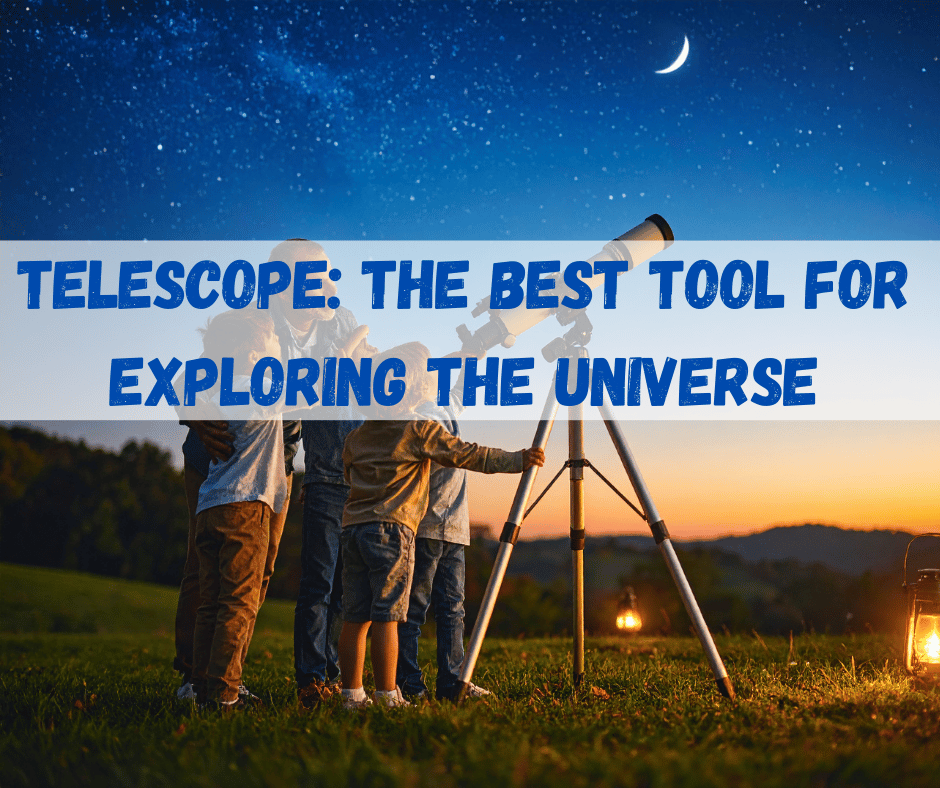
Have you ever looked up at the night sky and wondered what lies beyond the twinkling stars? The universe is a vast expanse of cosmic wonders, from distant galaxies to the intricate details of our own Moon. What if you could see it all up close?
Telescopes are your personal portals to the cosmos. They are not just scientific instruments; they are time machines that reveal light from stars millions of years old. With a telescope, you can witness the swirling storms on Jupiter, the magnificent rings of Saturn, and the craters on the Moon in stunning detail. It’s a chance to explore the universe from your own backyard.
Imagine the thrill of discovering the Andromeda Galaxy for the first time, transforming a faint smudge of light into a swirling spiral of a hundred billion stars. Picture sharing that awe-inspiring moment with family and friends as you spot Jupiter's moons, just as Galileo did centuries ago. Owning a telescope isn't just about seeing; it's about connecting with the cosmos on a personal level and embarking on a journey of endless discovery.
Are you ready to stop just looking at the sky and start truly exploring it? Begin your stargazing adventure today and unveil the beauty that lies beyond.
How We Choose the Best Telescope
Choosing the right telescope can be tricky, but we're here to help you find the perfect one for your stargazing adventures.
First, we look at the type of telescope—reflector, refractor, or compound. Each one is good for different things. For example, reflectors are great for spotting galaxies far, far away, while refractors give you crisp, clear views of the Moon and nearby planets.
We also check the aperture size. A bigger aperture lets in more light, which means brighter and sharper images. The downside is that it can make the telescope bigger and heavier. That's why we also think about portability, especially if you plan on taking your telescope on the road.
Of course, we look at the quality of the lenses and mirrors. After all, you want a view that's as clear and distortion-free as possible. Ease of use is a big one for us, too. We love telescopes that are simple to set up and use, especially for beginners.
If you're into taking photos of the cosmos (astrophotography), we've got you covered. We look for telescopes that play well with cameras. We also consider how well-built and durable they are, so you get the most bang for your buck.
Finally, we dive into what other stargazers and experts are saying. This helps us get a complete picture, so you can feel confident in your choice.
Check out our top picks for the best telescopes on the market today!
Solo Mark 130EQ Newtonian Reflector Telescope: Discover the Universe One Star at a Time
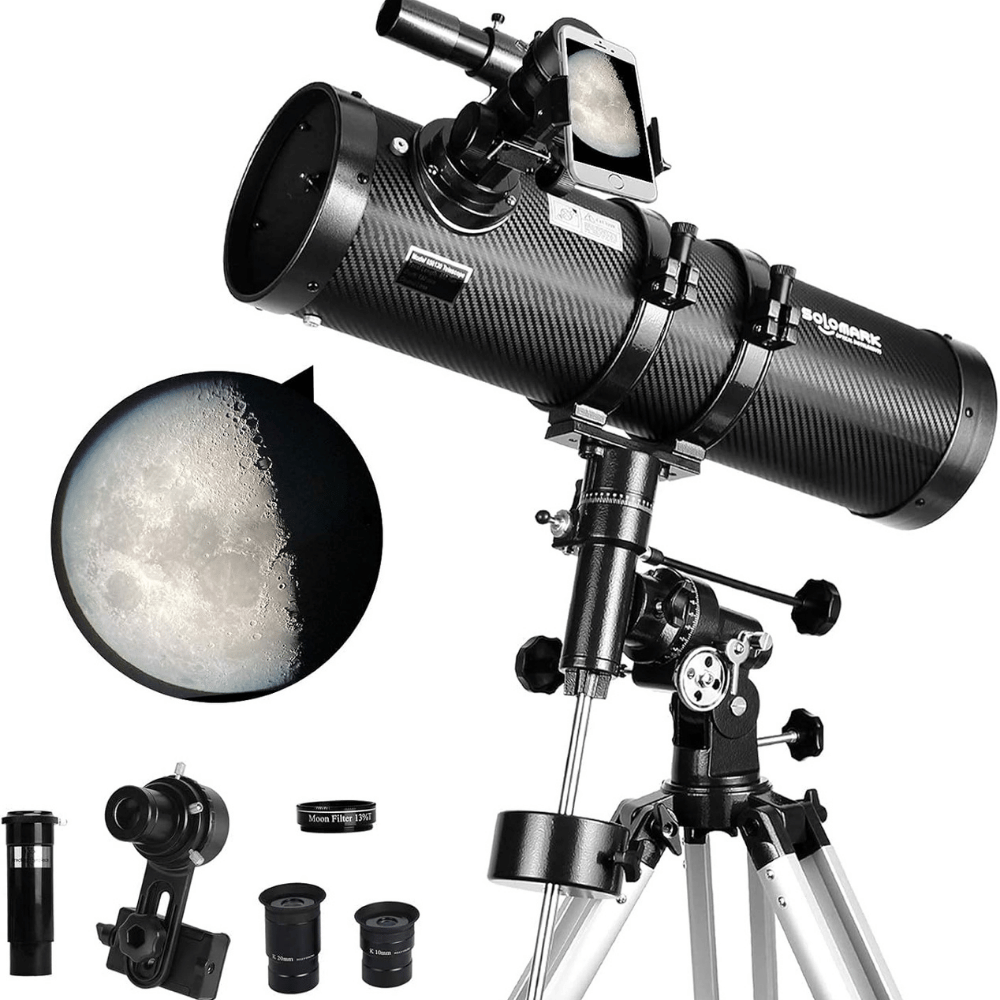
Best For Newtonian Reflector Design
Solo Mark 130EQ Newtonian Reflector Telescope
The nebulae deliver crystal-clear views of celestial wonders. With its powerful 130mm aperture and precision EQ mount, this telescope is perfect for beginners and hobbyists alike. Explore planets, nebulae, and beyond with ease, all from the comfort of your backyard.
Why We Think It's Dandy:
Because the universe is calling, and this telescope is the perfect way to answer! The Solo Mark 130EQ isn’t just for gazing; it’s for discovering. It brings distant galaxies and shimmering nebulae right to your eyes with stunning clarity. Whether you're tracking the moon's craters or getting your first glimpse of Jupiter's moons, this telescope makes every night an adventure. Here’s why we’re over the moon for it:
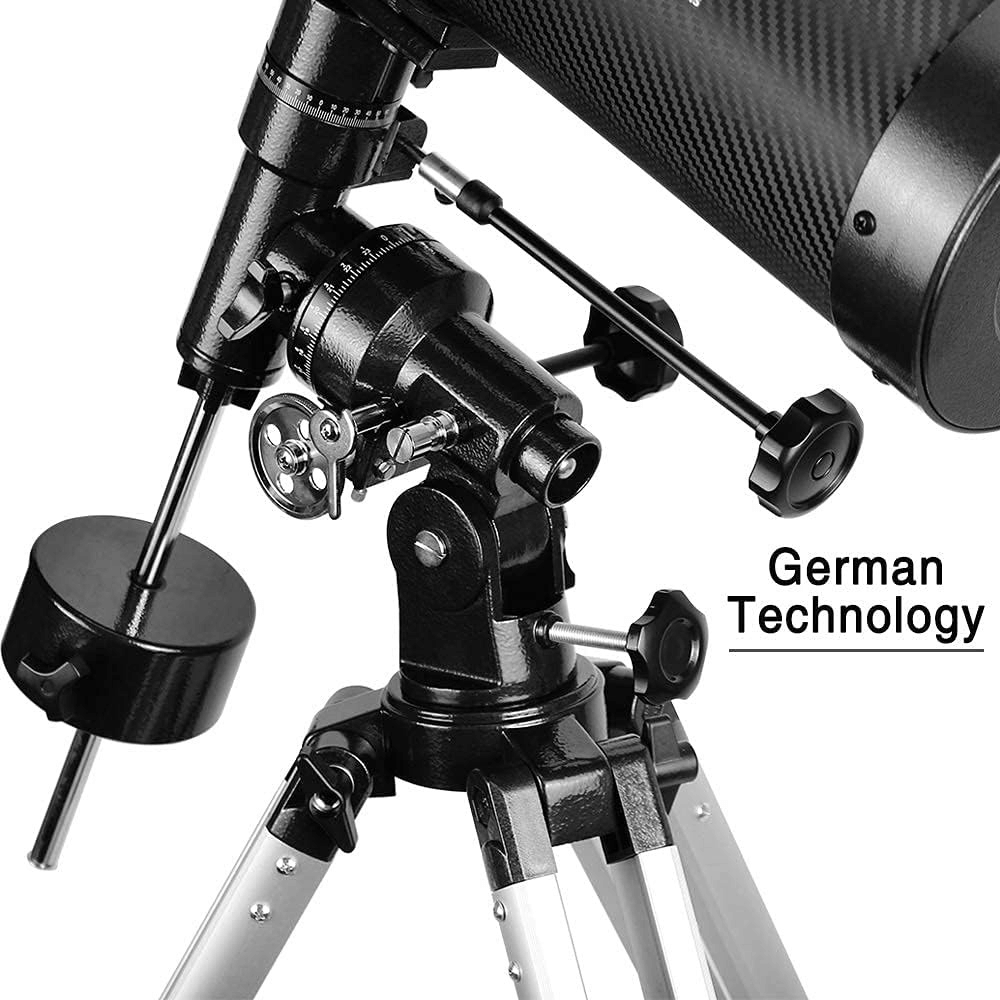
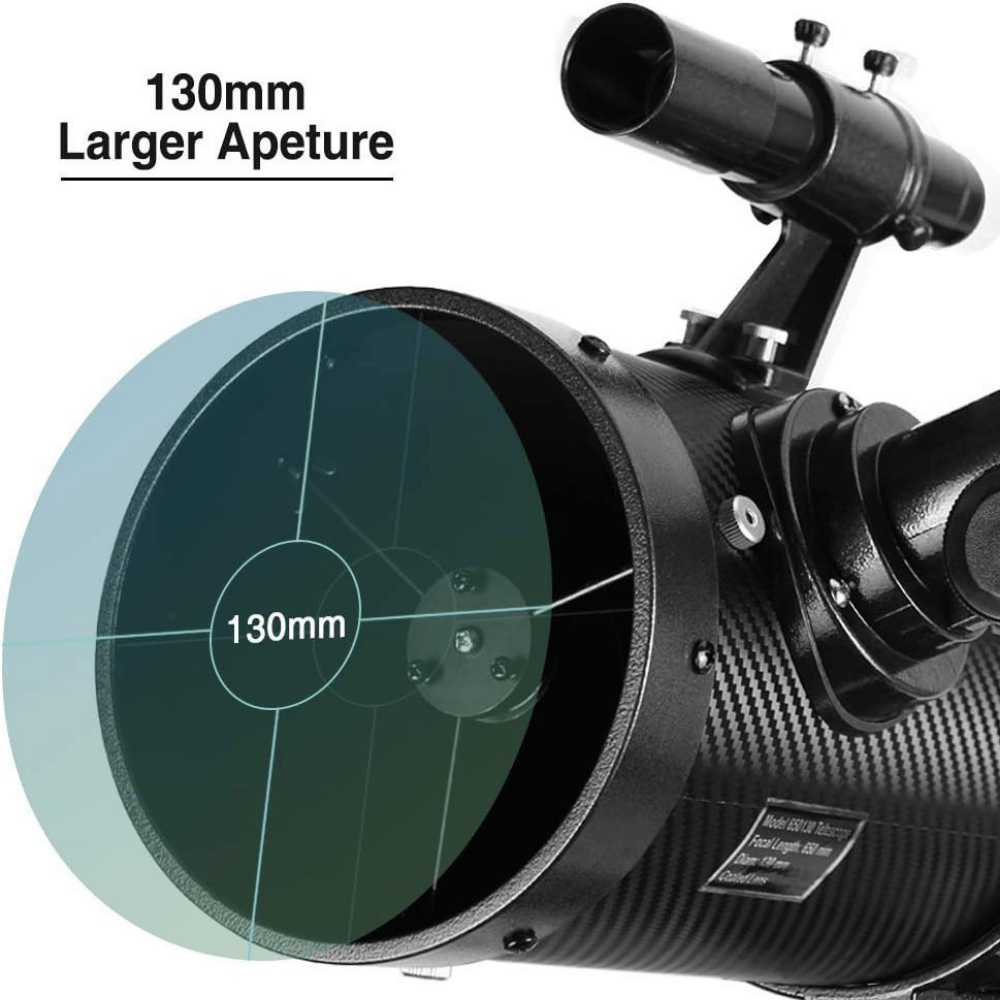
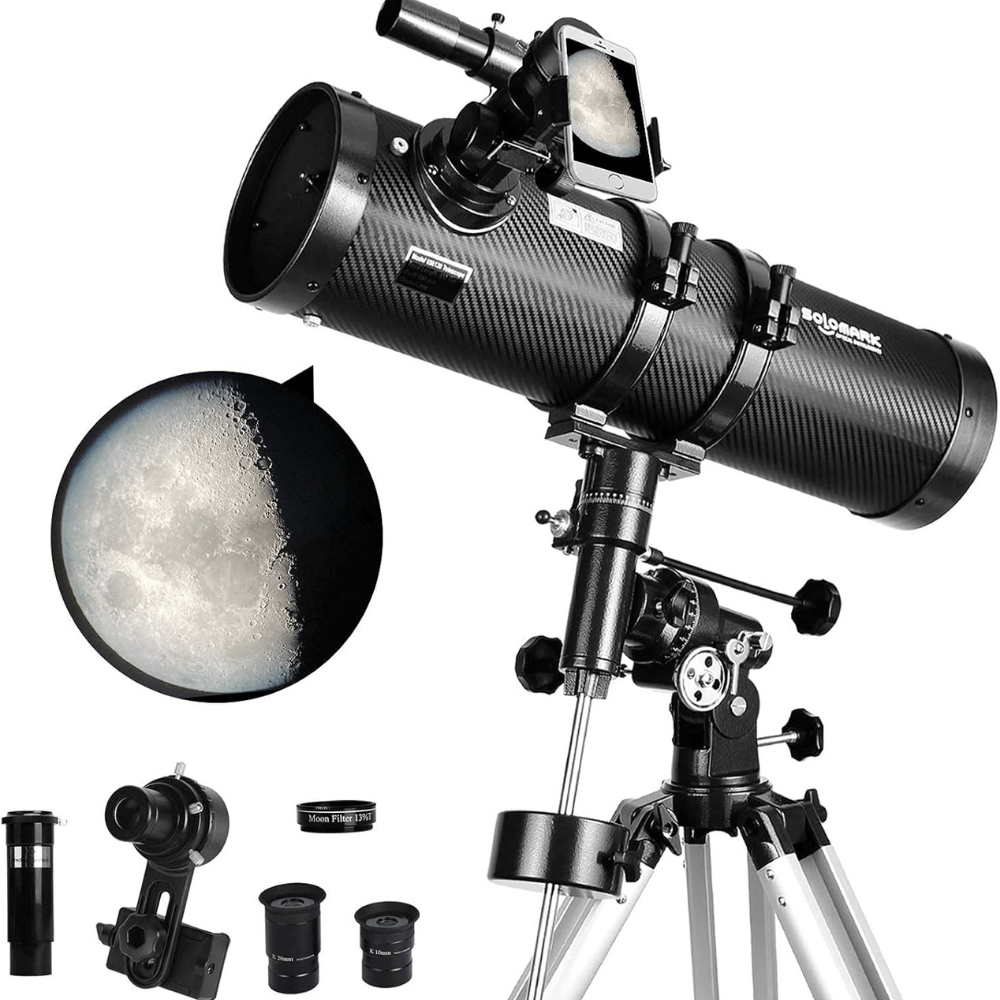
- Bright, Beautiful Views: With a massive 130mm aperture, this telescope gathers an impressive amount of light. The result? Brighter, more detailed images of deep-sky objects that other telescopes might miss.
- Track with Precision: The German Equatorial Mount is a game-changer for following celestial objects as they move across the sky. Its fine-tuned controls let you track planets and stars smoothly, so you can lock onto your target and stay with it.
- High-Quality Optics: Featuring fully-coated glass optics and a sleek carbon fiber finish, this telescope is engineered for performance. It enhances brightness and clarity, delivering sharper views of the cosmos.
- Capture and Share Your Discoveries: The included smartphone adapter lets you capture breathtaking photos of the moon, planets, and more. Sharing your astronomical finds with friends and family has never been easier.
What You Should Know:
Before you embark on your cosmic journey, here’s the essential info to get you started. This telescope is packed with everything you need to begin exploring right out of the box:
- Magnification Power: It comes with two high-quality eyepieces (K10mm and K20mm) and a 1.5X Barlow lens, offering a range of magnifications to get both wide-field views and detailed close-ups.
- Stable and Sturdy: The adjustable aluminum alloy tripod provides a solid, wobble-free foundation for your observations. It also includes a handy accessory tray to keep your extra lenses and filters within reach.
- Moon Gazing Ready: The included 13% transmission moon filter reduces glare and enhances contrast, allowing you to see incredible detail on the lunar surface without straining your eyes.
- Easy Object Sighting: The 6x30 finderscope helps you locate celestial objects quickly and easily, so you can spend less time searching and more time observing.
With its powerful optics and user-friendly design, the Solo Mark 130EQ is your all-in-one ticket to exploring the wonders of the night sky. Get ready to be amazed!
ZWO Seestar S30 All-in-One Smart Digital Telescope: See the Stars Like Never Before!
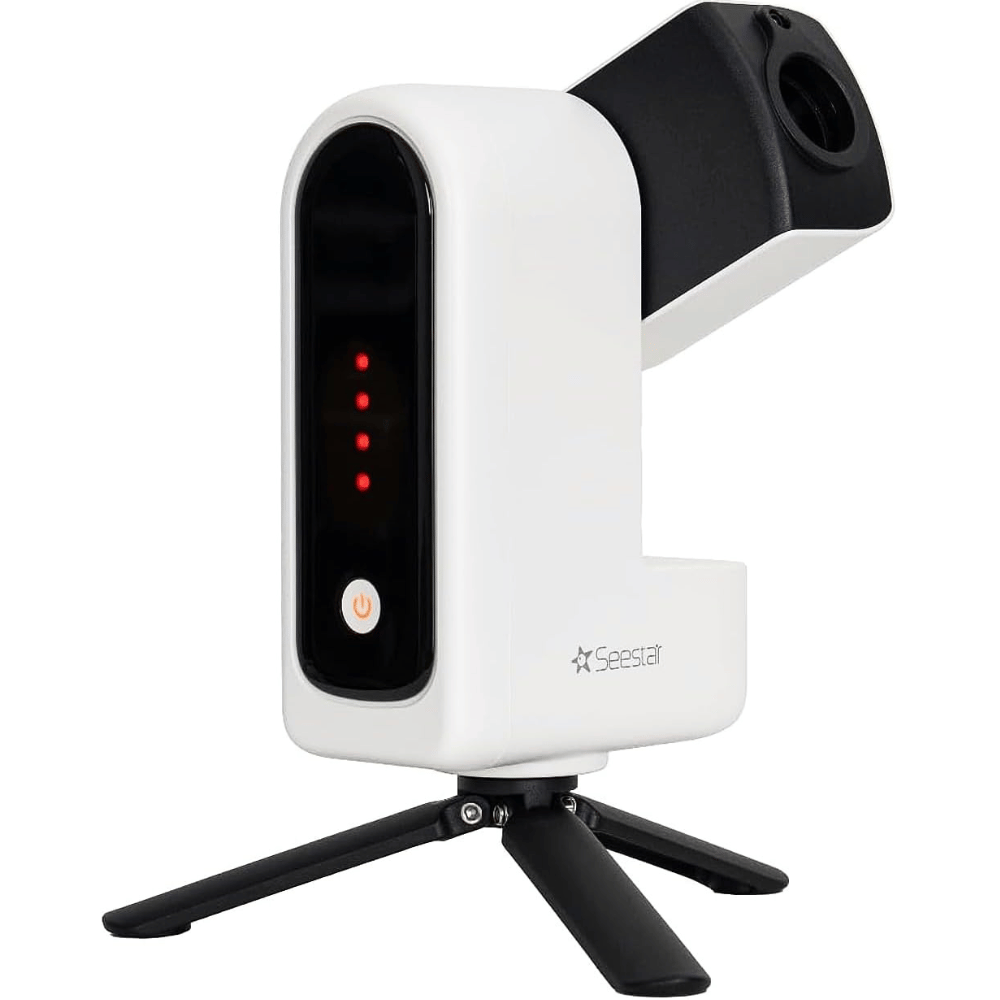
Best For Smart Digital Design
ZWO Seestar S30 All-in-One Smart Digital Telescope
The ZWO Seestar S30 is your gateway to the cosmos! This all-in-one smart telescope combines portability, ease of use, and high-tech features. With automated star tracking and stunning image clarity, it’s perfect for beginners and pros alike—capture breathtaking celestial views effortlessly with just your smartphone!
Why We Think It's Dandy:
Who knew you could hold the entire universe in your hands? The ZWO Seestar S30 Smart Telescope brings professional-grade astrophotography to everyone, making cosmic wonders more accessible than ever. It’s so light you can toss it in your backpack, yet so powerful it reveals the stunning details of distant galaxies. Here's why we're obsessed:
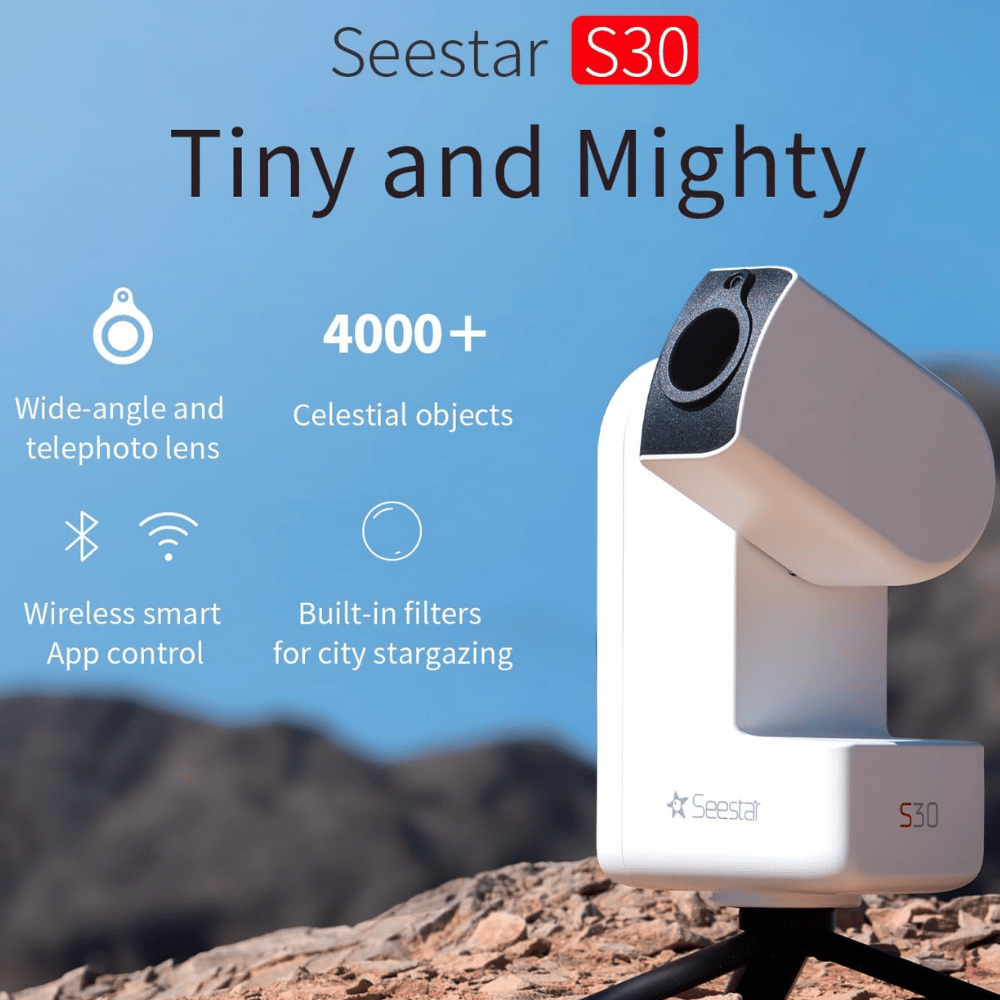
- Capture the Cosmos Effortlessly: With automatic star-finding, tracking, and shooting, this telescope takes the guesswork out of astrophotography. Just point it at the sky, and the Seestar App guides you to breathtaking celestial objects.
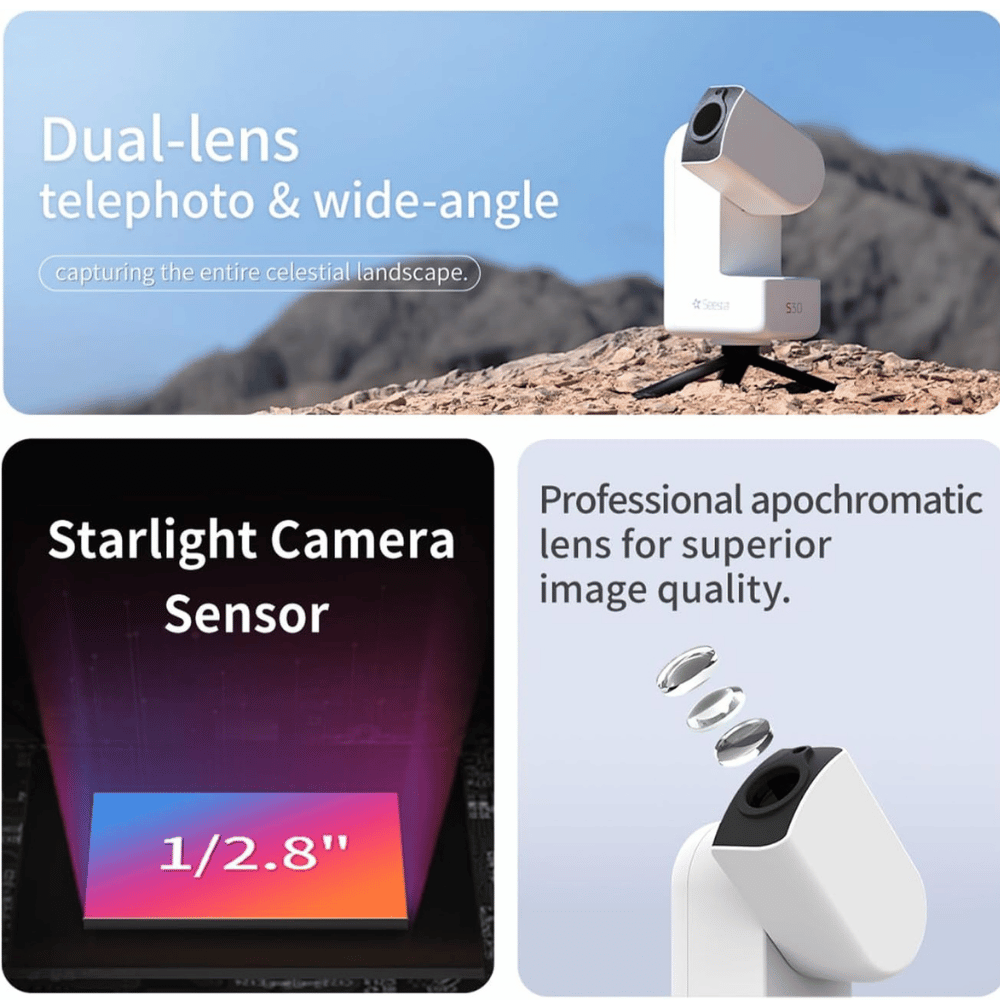
- Dual-Lens for Double the Wow: Switch between a powerful telephoto lens for detailed shots of galaxies and nebulae, and a wide-angle lens to capture sweeping nightscapes or find your target with ease.
- Shoot Like a Pro, Instantly: Stargazing Mode delivers jaw-dropping images of deep-sky objects, Scenery Mode captures stunning landscapes and wildlife, and Solar System Mode brings the Moon and Sun into sharp focus (with the included solar filter).
- Crystal-Clear Images Anywhere: Integrated light pollution and UV/IR cut filters ensure your photos are crisp and vibrant, even from a light-polluted city. It’s like having a portable dark-sky site!
- Smart and Simple Post-Processing: The app’s automatic post-processing and smart noise reduction transform your raw captures into polished, shareable masterpieces with a single tap.
What You Should Know:
Ready to launch your own space exploration mission from your backyard? Here’s everything you need to know about your new cosmic companion:
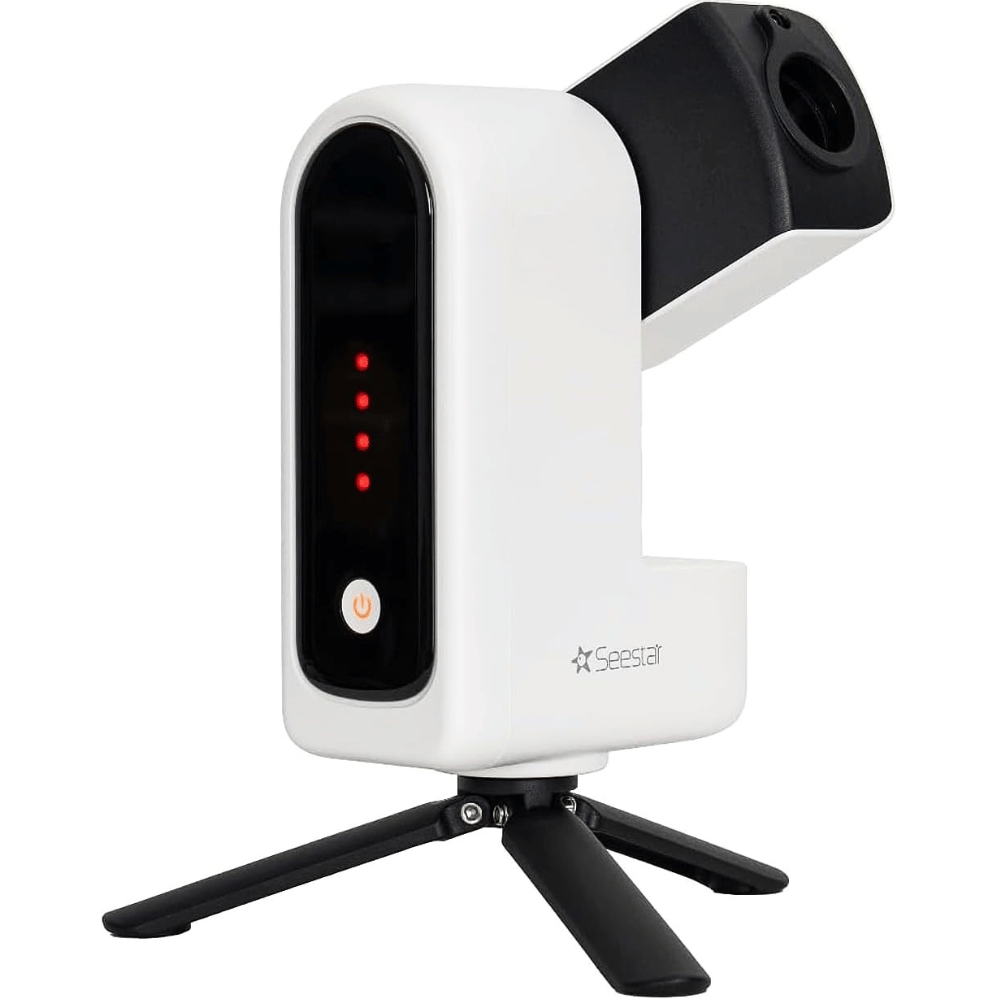
- Ultra-Portable Design: Weighing just 3.6 lbs (1.65 kg), the Seestar S30 is designed for adventurers. Its compact size makes it the perfect travel companion for stargazing on the go.
- Professional Optics: The telescope features a 30mm apochromatic triplet lens with Extra-low Dispersion (ED) glass, ensuring every star is captured with incredible sharpness and clarity.
- Advanced Shooting Modes: Go beyond simple snapshots with advanced features like EQ Mode for precise tracking, Plan Mode to schedule an entire night of shooting, and Mosaic Mode to stitch together expansive celestial panoramas.
- Powerful Sony Sensor: Equipped with a starlight-grade Sony IMX662 sensor, the S30 excels in low-light conditions, minimizing noise and delivering superior performance on the darkest nights.
- All-in-One Package: Your Seestar S30 comes ready for adventure with a tripod, Type-C cable, a protective suitcase, and a quick guide to get you started right out of the box.
The ZWO Seestar S30 isn't just a telescope; it's your personal gateway to the stars. Whether you're a curious beginner or a seasoned astronomer, you'll be captivated by the stunning images you can create. Get yours today and start your celestial journey!
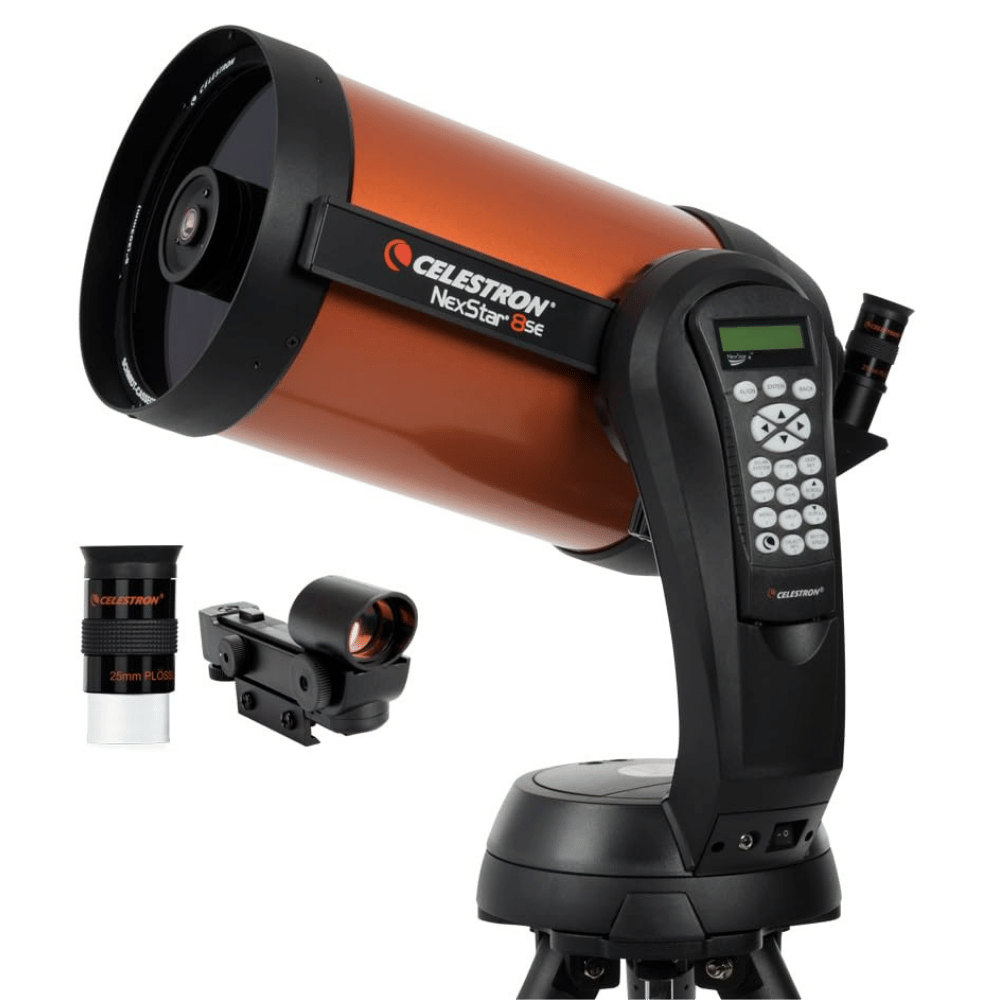
Celestron NexStar 8SE Computerized Telescope: Stargazing Made Smart and Effortless!
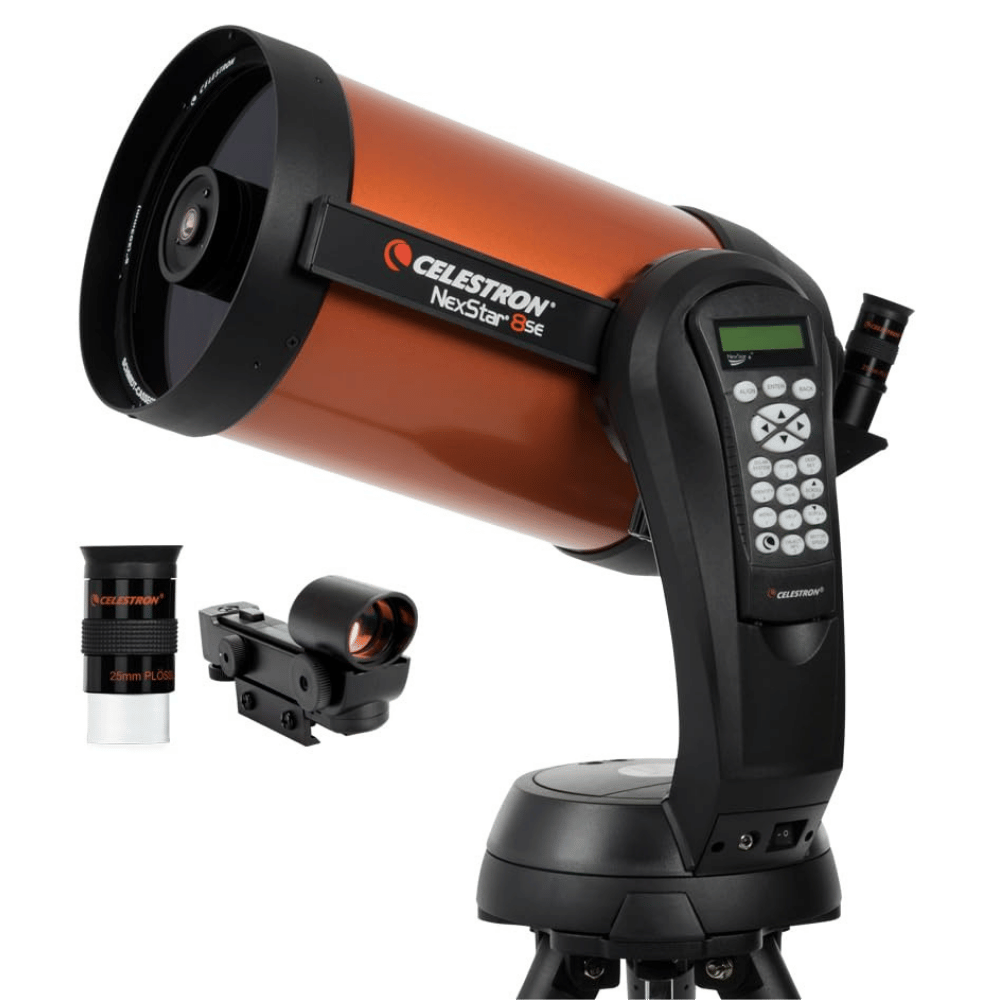
Best For Schmidt-Cassegrain Optical Design
Celestron NexStar 8SE Computerized Telescope
Discover the universe with the Celestron NexStar 8SE! This top-rated computerized telescope combines powerful 8-inch optics with user-friendly technology. Its motorized mount and SkyAlign system make finding celestial objects a breeze, perfect for beginners and enthusiasts alike. See planets, galaxies, and beyond with stunning clarity and unbeatable convenience.
Why We Think It's Dandy:
Ready to take your stargazing from "oh look, a bright spot" to "wow, is that Jupiter's Great Red Spot?" The Celestron NexStar 8SE is the celestial tour guide you never knew you needed. It does the heavy lifting (and locating) so you can focus on the awe-inspiring views. Here’s why this orange tube is the star of the show:
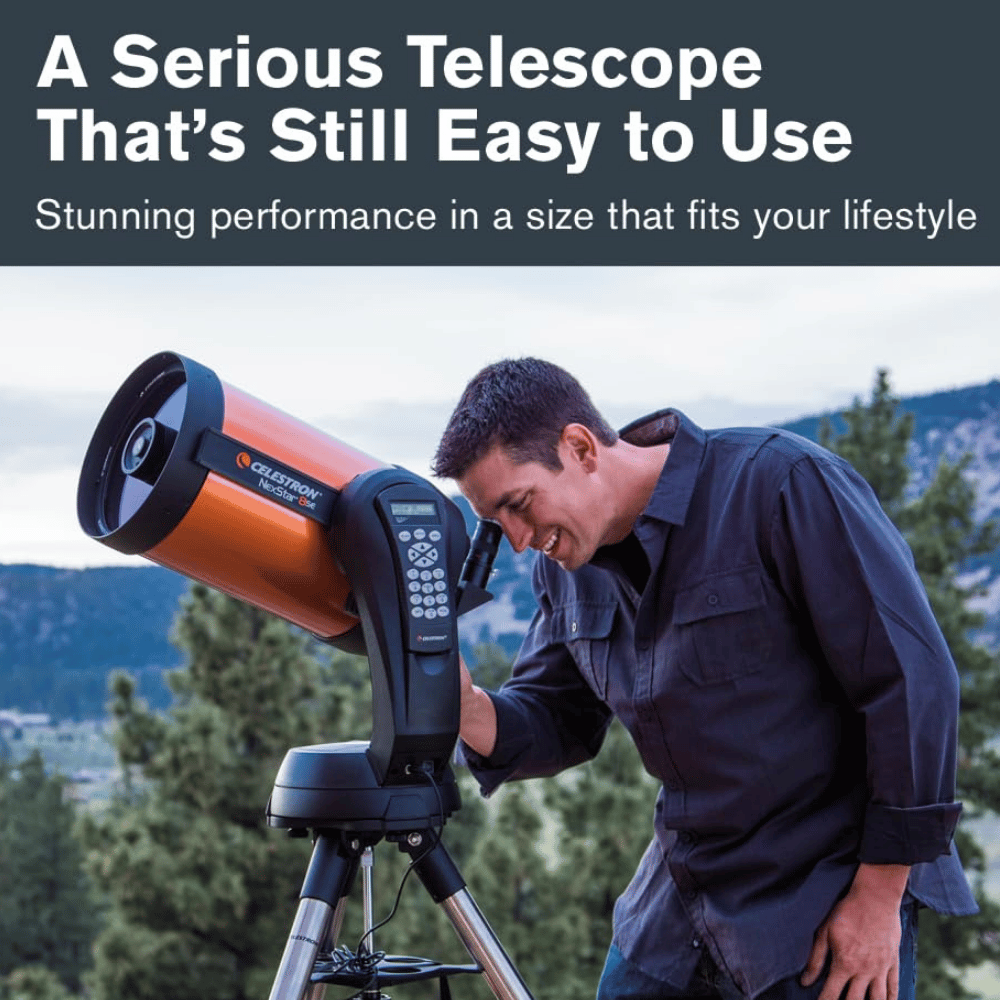
- A Tour Guide for the Cosmos: Forget fumbling with star charts in the dark. The NexStar 8SE comes with a database of over 40,000 celestial objects. Simply select a target on the hand control, and the computerized mount automatically tracks it for you. It’s like having a professional astronomer in your backyard.
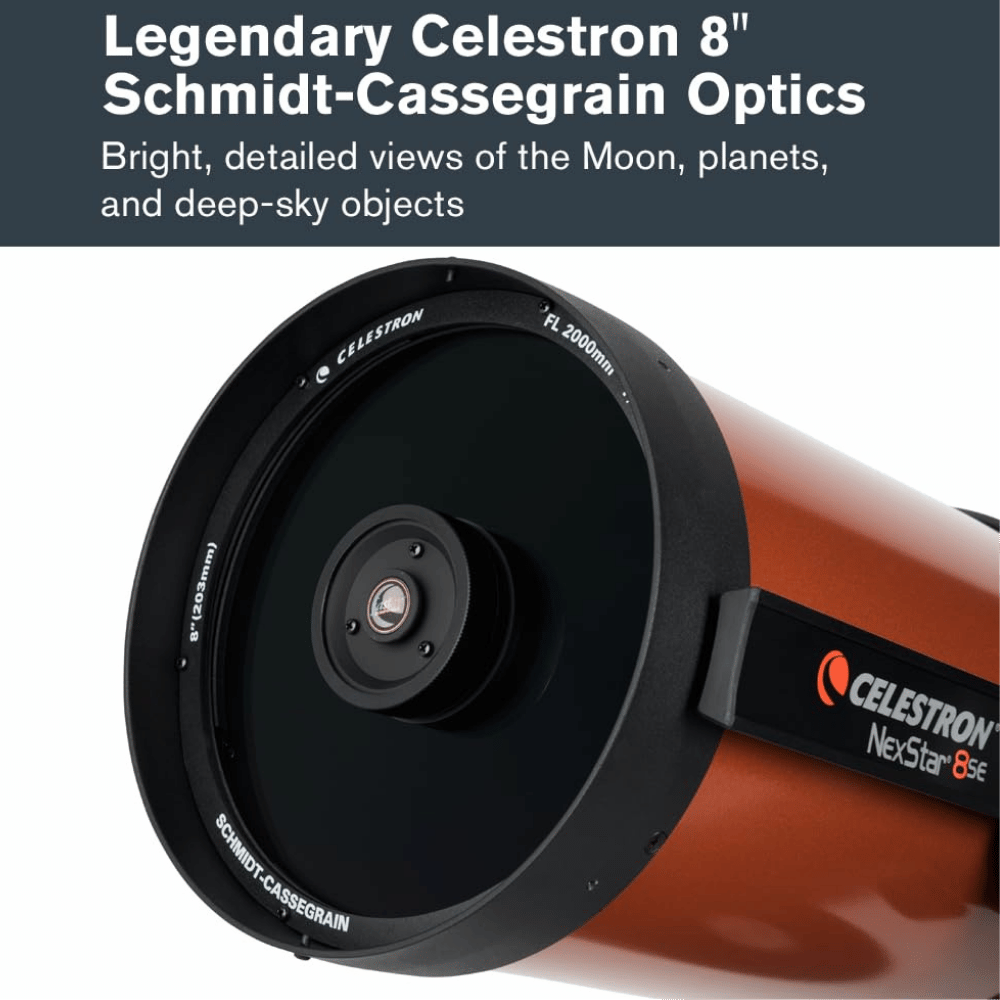
- Stunning Views, No squinting Required: With an impressive 8-inch aperture, this telescope gathers plenty of light, revealing crisp details of the Moon, the rings of Saturn, and even deep-sky treasures like the Whirlpool Galaxy. The advanced Schmidt-Cassegrain optics ensure that every view is bright, sharp, and breathtaking.
- Set Up So Easy, It’s Almost Magic: Thanks to SkyAlign technology, you can get ready to observe in minutes. Just center any three bright objects in the eyepiece (you don’t even need to know their names!), and the system aligns itself. It’s perfect for beginners who want to skip the frustration and get straight to the fun.
- Portable Powerhouse: Despite its large aperture, the unique single fork arm design keeps the telescope compact and portable. Whether you're setting up in your driveway or heading to a dark sky site for the weekend, the 8SE breaks down easily for transport without sacrificing stability.
What You Should Know:
Before you officially launch your backyard observatory, let's get into the nitty-gritty. While this telescope is smart enough to find galaxies far, far away, there are a few earthly details you’ll want to keep in mind to ensure your cosmic journey is smooth sailing:
- Power Up: This computerized beauty needs juice to run. It takes 8 AA batteries, but for longer viewing sessions, we highly recommend grabbing an external power supply or AC adapter to keep the tracking smooth all night long.
- Aperture & Optics: You're getting an 8-inch (203.2mm) Schmidt-Cassegrain optical tube with StarBright XLT coatings. This design balances portability with serious light-gathering power, making it a fantastic all-arounder for planets and deep-sky objects.
- Mount & Tripod: The kit includes a fully automated GoTo mount and a sturdy steel tripod. The single fork arm mount is rigid yet easy to handle, and the "no-tool" setup means you won’t be scrambling for a screwdriver in the dark.
- Accessories Included: You’ll receive a StarPointer red dot finderscope (great for alignment), a 25mm Plossl eyepiece, a star diagonal, and the NexStar+ hand control. It’s everything you need to start observing right out of the box.
Whether you’re exploring lunar craters or distant galaxies, this all-in-one kit ensures a smooth and enjoyable experience under the night sky. Get ready to unlock the cosmos and discover the wonders of the universe!
Head-to-Head Comparison: Of Telescopes
Telescope
Ready to pick your celestial sidekick? Choosing the right telescope can feel like navigating an asteroid field, but we're here to help. Let's break down the specs of the Solo Mark 130EQ, ZWO Seestar S30, and Celestron NexStar 8SE to see which one will launch your stargazing adventures into orbit.
Optical Design
- Solo Mark 130EQ: This telescope employs a Newtonian reflector design, ideal for deep-sky observations and delivering bright, detailed images. It is equipped with a 130mm aperture that gathers ample light for viewing celestial objects.
- ZWO Seestar S30: The Seestar S30 features an all-in-one smart digital design, integrating a camera with digital telescope capabilities. While not traditional in design, it provides high-quality images and is perfect for casual stargazing and astrophotography.
- Celestron NexStar 8SE: The NexStar 8SE boasts a robust Schmidt-Cassegrain optical design with an 8-inch (203.2mm) aperture, offering exceptional light-gathering ability and crisp, detailed views of both planets and deep-sky objects.
Portability
- Solo Mark 130EQ: Weighing moderately due to its reflector design, it can be moved with some effort and comes with a steady equatorial mount for smooth tracking.
- ZWO Seestar S30: This compact and lightweight model is a standout in portability, designed with travel enthusiasts in mind. Its small size and easy setup make it perfect for stargazing on the go.
- Celestron NexStar 8SE: While not as portable as the Seestar S30, the NexStar 8SE remains manageable with its single-arm mount. It’s bulkier but includes features like SkyAlign, which simplifies setup.
Technology and Automation
- Solo Mark 130EQ: This model includes manual fine-tuning through the equatorial mount, which may require experience for precise tracking. Accessories like the 1.5X Barlow lens and smartphone adapter expand its usability but lack full automation.
- ZWO Seestar S30: With its smart capabilities, including app control and automatic object detection, the Seestar S30 is built for modern users, offering a seamless digital experience, especially for novice astronomers.
- Celestron NexStar 8SE: The NexStar 8SE excels in automation, featuring a GoTo mount and a SkyAlign system capable of locating over 40,000 celestial objects. This telescope is ideal for both beginners and advanced users aiming for a guided experience.
Accessories
- Solo Mark 130EQ: Includes a 1.5X Barlow lens, smartphone adapter, and 13% T moon filter to enhance observations and astrophotography.
- ZWO Seestar S30: Comes with an integrated camera system, eliminating the need for additional accessories, yet limiting customization compared to traditional telescopes.
- Celestron NexStar 8SE: Fully loaded with a red dot finderscope, 25mm Plossl eyepiece, star diagonal, and the NexStar+ hand control, providing everything needed out of the box for immediate exploration.
User Experience
- Solo Mark 130EQ: Offers a more hands-on approach, suited for users who enjoy manually tracking objects and adjusting focus for optimal views.
- ZWO Seestar S30: Caters to users seeking convenience and ease of use, with an intuitive app-driven interface that simplifies the observation process.
- Celestron NexStar 8SE: Balances user-friendliness with advanced capabilities, satisfying the needs of complete beginners and experienced stargazers alike.
Which Telescope is Right for You?
The best telescope depends on your specific needs:
- If you prefer traditional stargazing with manual adjustments, the Solo Mark 130EQ offers excellent value and classic functionality.
- For those prioritizing portability and automation, the ZWO Seestar S30 is a perfect travel-friendly smart telescope.
- Meanwhile, the Celestron NexStar 8SE is a versatile option for users seeking powerful optics and advanced features in a fully automated system, great for exploring a vast range of celestial objects.
Frequently Asked Questions (FAQs) About Telescopes
Choosing the right telescope can feel overwhelming, especially with so many options available. To help you make an informed decision and address common concerns, we've compiled a list of frequently asked questions about telescopes. From understanding key features to tips for beginners, this section covers everything you need to know to enhance your stargazing experience.
What are the main types of telescopes, and how do they differ?
There are three main types of telescopes: refracting, reflecting, and compound (or catadioptric) telescopes. Refracting telescopes, like an achromatic refractor, use lenses to gather and focus light, offering crisp, sharp images, especially of planets and the moon. They often have a long focal length, which contributes to their detailed views but can sometimes result in chromatic aberration, creating a fringe of false color around objects. Reflecting telescopes, a design pioneered by Isaac Newton, use mirrors to focus light. These are generally larger and more cost-efficient for viewing faint, deep space objects. Finally, compound telescopes combine lenses and mirrors in their optical tube assembly, focusing light efficiently while maintaining a compact design and a long focal length, making them ideal for both planetary and deep-sky observation.
What should beginners look for when choosing a telescope?
Beginners should focus on telescopes with good aperture, which is the diameter of the main lens or mirror—larger apertures gather light more effectively, making celestial objects appear brighter and more detailed. Optical quality is paramount. Additionally, simplicity in setup and use, such as a sturdy mount type and intuitive controls, is key. Telescopes with low-maintenance designs like refractors or a portable telescope are often ideal for novice stargazers starting their journey into visual astronomy. It's also worth noting that many models offer many benefits for beginners.
Can I use a telescope in a city with light pollution?
Yes, telescopes can still be used in cities; however, light pollution from the Earth may limit what you can see. Bright objects like the moon, planets, and some star clusters remain visible. To improve viewing, consider using a light pollution filter. The science shows that traveling to darker areas during special stargazing trips will yield the best views of deep space.
What accessories are essential for a telescope?
Essential accessories include a few extra eyepieces with different focal lengths, a sturdy tripod or mount for stability, and a finder scope to locate objects more easily across the entire field of view. A dew shield is also crucial to prevent moisture from condensing on your optics. For those interested in astrophotography, an adapter for a camera with a CCD camera sensor and other accessories are useful. Always check what's in stock before purchasing.
Do I need a computerized (GoTo) telescope?
Computerized telescopes with GoTo functionality, like the Celestron Astro Fi series, are highly beneficial for beginners. These systems come with pre-programmed star maps; you can simply push a button to track objects. However, they are more expensive and require power. More advanced models like the Celestron Origin can even produce processed images on the spot. Consider your budget and comfort with technology when deciding.
Is maintenance required for telescopes?
Yes, regular maintenance ensures the telescope's optical quality remains in peak condition. Reflectors may need occasional mirror cleaning and alignment (collimation). Always store your telescope in a dry, dust-free environment and cover its optical tube assembly when not in use. You should test its alignment before long astrophotography sessions.
Can telescopes be used during the day?
Yes, but you should never point a telescope at the sun unless it is equipped with a proper solar filter. Doing so can cause severe damage to your eyes and the telescope's excellent optics. Even professional instruments like the Hubble Space Telescope, managed by NASA, have strict safety protocols for solar observation.
The Best Telescope
Choosing your first telescope is an exciting step into the world of stargazing and astronomical exploration. By understanding your goals and needs, you can make an informed decision about the type of telescope that is right for you.
Start with a model that fits your budget while still offering reliable performance, and always prioritize quality over price. Familiarize yourself with important safety tips, such as never pointing your telescope at the sun without proper filtration, to ensure a safe and enjoyable experience.
Remember, astronomy is a lifelong hobby, and your initial telescope doesn't have to be perfect; it only needs to spark your curiosity about the cosmos. With time and practice, you'll gain valuable skills and knowledge, helping you appreciate the beauty and vastness of our universe.
Whether you're marveling at the craters on the Moon, searching for planets, or simply enjoying the stars, your telescope is a gateway to endless discovery and wonder.